
Products

CIRMS connects Intelligent Automation, operational monitoring, data acquisition and AI Data Readiness within one unified platform, with a planned evolution toward AI-assisted operational intelligence.

CIRMS Global Layers

Operate. Prepare.
Evolve toward intelligence.

CIRMS brings together Intelligent Automation, operational monitoring and AI Data Readiness within a unified resource management platform. Its Global Layers connect day-to-day operations with the preparation of organizational data for AI.

HERCULES machines perform GL3 automation and data acquisition alongside GL4 AI Data Readiness. The planned GL5 evolution is designed to build on this foundation with AI-assisted analysis, decision support and conversational access to CIRMS knowledge.

GLOBAL LAYER
GL3

Intelligent Automation & Data Acquisition
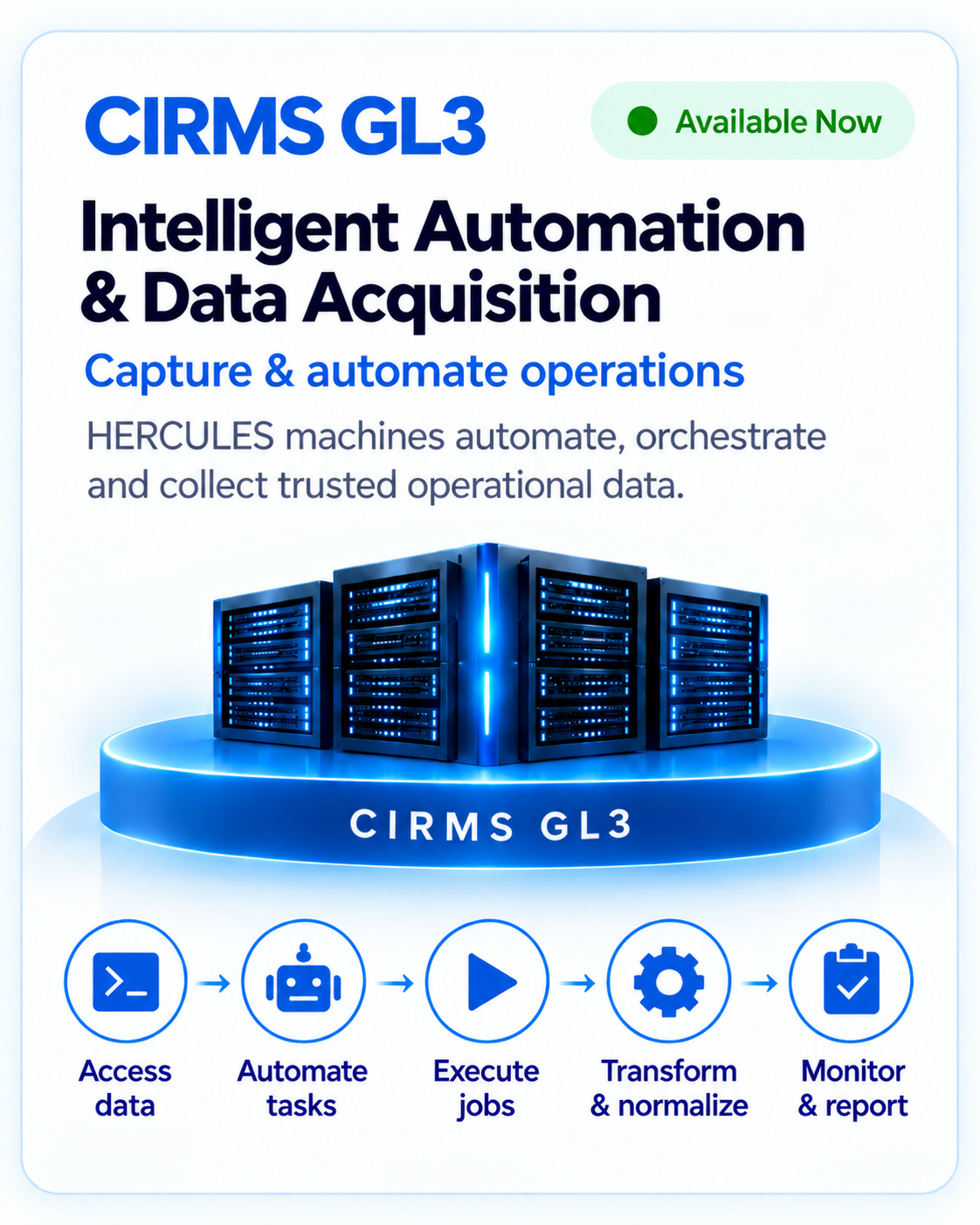
CIRMS GL3 product illustration showing Intelligent Automation and Data Acquisition capabilities.

Establish centralized operational control with automated administration, monitoring, health checks and reporting. GL3 helps technical teams manage connected resources consistently while collecting the operational data that supports the next stages of CIRMS.

Core capabilities: Intelligent automation, resource monitoring, health checks, dashboards, reports and operational data acquisition.

Designed for: Organizations seeking to reduce repetitive administrative work and improve visibility across managed environments.

View GL3 features →
GLOBAL LAYER
GL4

AI Data Readiness

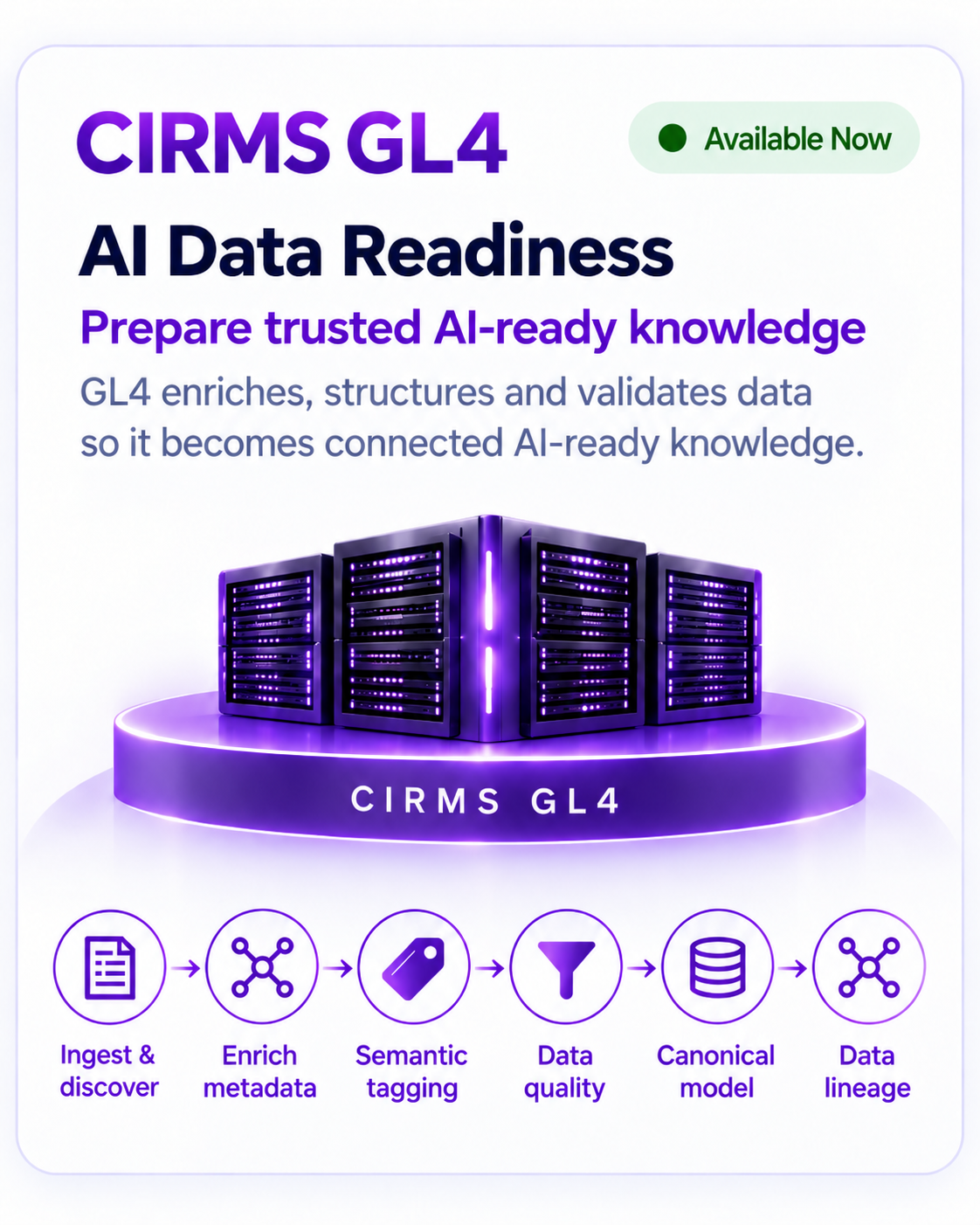
CIRMS GL4 product illustration showing AI Data Readiness capabilities.

Build on the operational data acquired through GL3 and transform it into structured, curated and AI-ready knowledge. GL4 performs the preparation pipeline on HERCULES, from data curation and document generation to chunking, vectorization and semantic validation.

Core capabilities: Data curation, AI document generation, chunk management, vector embeddings, semantic validation and readiness monitoring.

Designed for: Organizations preparing operational information for AI-assisted analysis and knowledge-based applications.

View GL4 features →
GLOBAL LAYER
GL5

AI Intelligence Planned

CIRMS GL5 product illustration showing planned AI Intelligence capabilities.

The planned GL5 layer is designed to connect AI models and conversational interfaces with the knowledge prepared through GL4. Its intended capabilities include AI-assisted analysis, operational and managerial decision support, and natural-language interaction with CIRMS knowledge.

Planned capabilities: AI model integration, intelligent assistance, knowledge-based analysis and conversational interaction.

Intended for: Organizations seeking to extend automation and AI Data Readiness with human-supervised AI assistance.

Discuss the GL5 roadmap →
Layer progression

One platform.
Three stages of capability.

The layers build on the same CIRMS foundation. GL3 operates and acquires data. GL4 prepares that information as governed AI-ready knowledge. The planned GL5 layer is intended to introduce AI-assisted intelligence on top of that prepared knowledge while keeping human oversight in the loop.

GL3 · Operate

Automate operational work, monitor managed resources, perform health checks and collect the operational data that CIRMS uses as its information foundation.

GL4 · Prepare

Transform collected operational data into traceable, structured and AI-ready knowledge through curation, document generation, chunking, vectorization and semantic validation.

GL5 · Assist Planned

Extend the platform with AI models, intelligent analysis and conversational access to CIRMS knowledge for human-supervised operational and managerial decision support.

Need the conceptual view? Visit the Layers page for a visual explanation of how GL3, GL4 and the planned GL5 work together.
Next steps

Build the right CIRMS configuration for your organization.

Explore how Intelligent Automation and AI Data Readiness can support your operational requirements. Contact Project TOHOL® to discuss your environment, deployment scope and the CIRMS capabilities relevant to your organization.

Discuss your environment