
Cost & Capacity Optimization
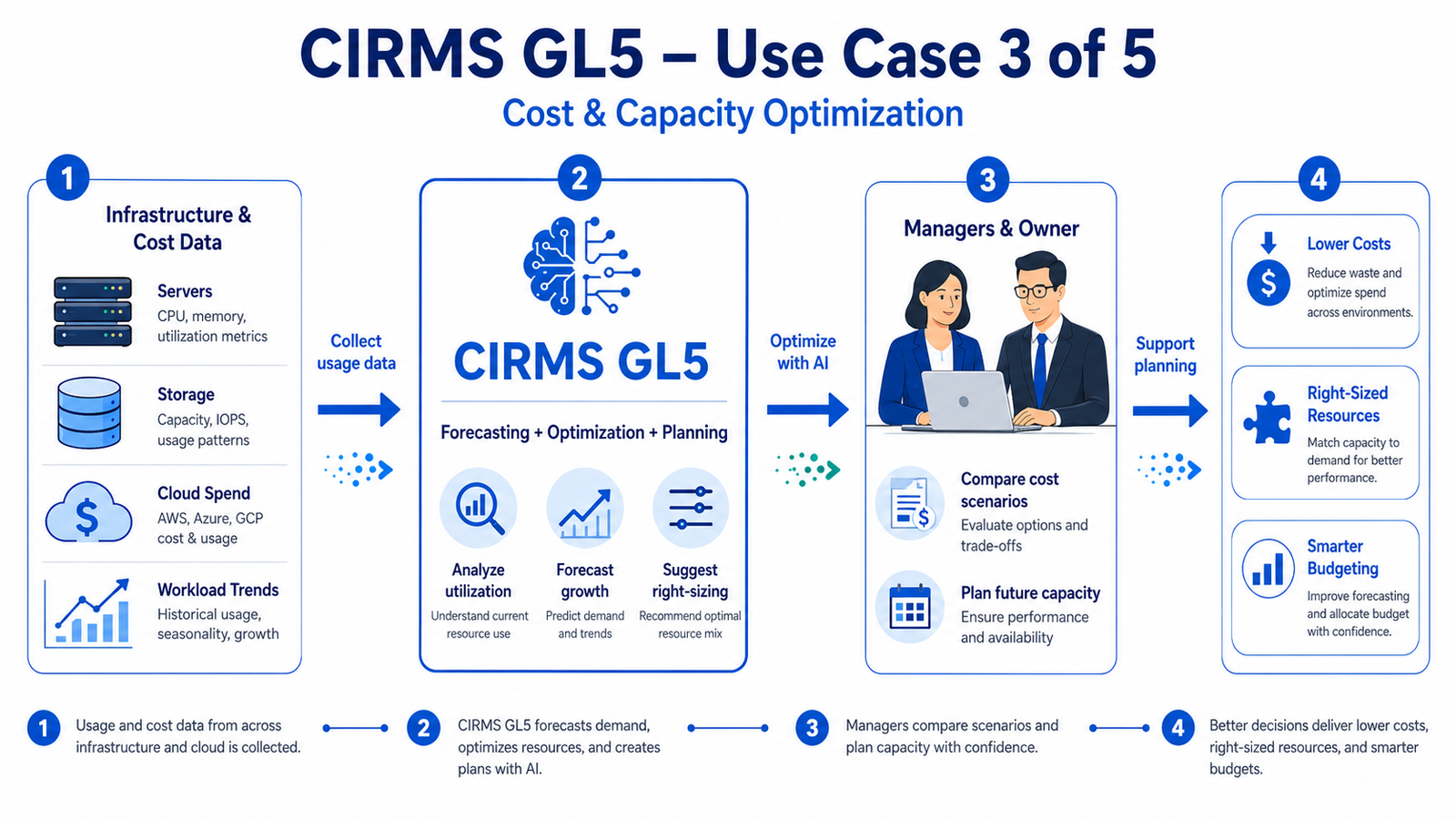
Combine resource usage, capacity and approved cost data in a proposed planning workflow, with AI-assisted forecasting and right-sizing suggestions.
A roadmap scenario based on the original CIRMS GL5 use case. Not a production deployment or a guaranteed outcome.
Plan resources with evidence, not guesswork.
Resource utilization and spending need to be understood together. The original use case proposes a workflow for comparing scenarios, examining growth patterns and assessing right-sizing options before a manager approves a change.
Information in scope
- Servers
- CPU, memory and resource utilization metrics.
- Storage
- Capacity, IOPS and usage patterns.
- Cloud spend
- Approved cost and usage exports; provider integrations must be scoped.
- Workload trends
- Historical usage, seasonal patterns and growth assumptions.
How the scenario could work.
Follow the proposed path from approved information to AI-assisted review and a decision owned by people.
- 01
Collect usage and costs
Define the approved infrastructure and cost sources for the planning scope.
- 02
Explore planned forecasting
Use GL5 concepts to analyze utilization, forecast demand and suggest resource options.
- 03
Compare scenarios
Managers assess trade-offs, performance needs and budget assumptions.
- 04
Approve a plan
Agree the resource decision and review its effect after implementation.
Cost visibility
Identify spending that deserves closer review.
Capacity fit
Compare resource needs with service and performance requirements.
Budget planning
Make the assumptions behind a capacity proposal explicit.
The original use-case concept.
What sits behind the use case.
Separate the platform foundation from planned intelligence and the requirements of the target environment.
GL3 / GL4 & architecture
GL3 resource monitoring and data acquisition provide operational inputs; GL4 can prepare the agreed datasets for AI use. Billing exports require explicit sourcing and reconciliation.
AI & future extensions
Demand forecasting, AI right-sizing suggestions and optimization recommendations are GL5 roadmap scenarios. No autonomous resource purchase, automatic scaling or savings percentage is promised.
People, data & permissions
Define price data, billing scope, usage windows, workload context and acceptable service limits. AWS, Azure and Google Cloud names in the original diagram describe potential inputs, not verified connectors.
A bounded evaluation
Choose one workload or service. Compare actual usage with a documented capacity baseline before testing any AI-assisted planning extension.
Candidate measures: unused capacity, resource utilization, forecast error and service performance after an approved change. Results need to be measured in the target environment.